
Re-Introduction
We're Back'ish

Hello again! After a six month hiatus to read “In Search Of Lost Time” (spoiler: It’s not a cookbook with a hidden Madeleine recipe) I’m pleased to re-introduce to you Relish, again.
The new format will go something like this: Each week (meaning bi-weekly or monthly) I’ll put out a free article with the normal philosophical ramblings on life, cooking, cuisine and farce meat. These musings will often, but not always, be related to a culinary theme or cookbook that I’m exploring. Much like that Daily Harvest subscription you signed-up for, I will promise convenience and quality, and then likely provide only sad, limp disappointment.
Following that free piece, I’ll dish out a subscriber-only piece for those big money spenders who throw a doubloon in my hat. In this segment, I’ll “add value” by breaking down the key takeaways, techniques, and kitchen wisdom from the week’s cookbook or extracurricular reading.
Let’s face it. Cookbooks are big and don’t have nearly enough pictures. Yet, within those sad, picture-less pages of words, there are often many useful insights that can improve the style, technique, and prowess of any cook. That’s where my worthless days as an office drone will prove valuable for you dear reader. I have both the time and inclination to rake through those starchy pages and serve to you the only the most delectable canapes of cooking secrets.
Some of the cookbooks may be familiar to you because they can be found on the floating bookshelves of every 3rd wave coffee shop - Tartine, Dining In, Bestia. Others might be a bit more esoteric, the kind of cookbook you find at a yard sale in Maine with tattered pages and recipes for porcupine stew.
What ties them all together, though, is that these books contain something useful that you didn’t even know you wanted to know. For example, we’ll dispel the myth that searing meat locks in juices and talk about better ways to cook it. We’ll converse on how to select fresh fish and properly store it. Or, we’ll take a look at how to roll out fresh pasta so you can ignite envy in all your enemies on Instagram.
Sure, you could ask your new AI assistant to research all of these cooking secrets for you. Or, you could look it up yourself like some sort of Web 2.0 peasant. But, most people have responsibilities and worthwhile pursuits like hang gliding that limit their ability or desire to read all 700 pages of Essentials of Classic Italian Cooking. Plus, you’d miss out on all my sweet food drawings, like this stick of butter surfing a pancake wave.
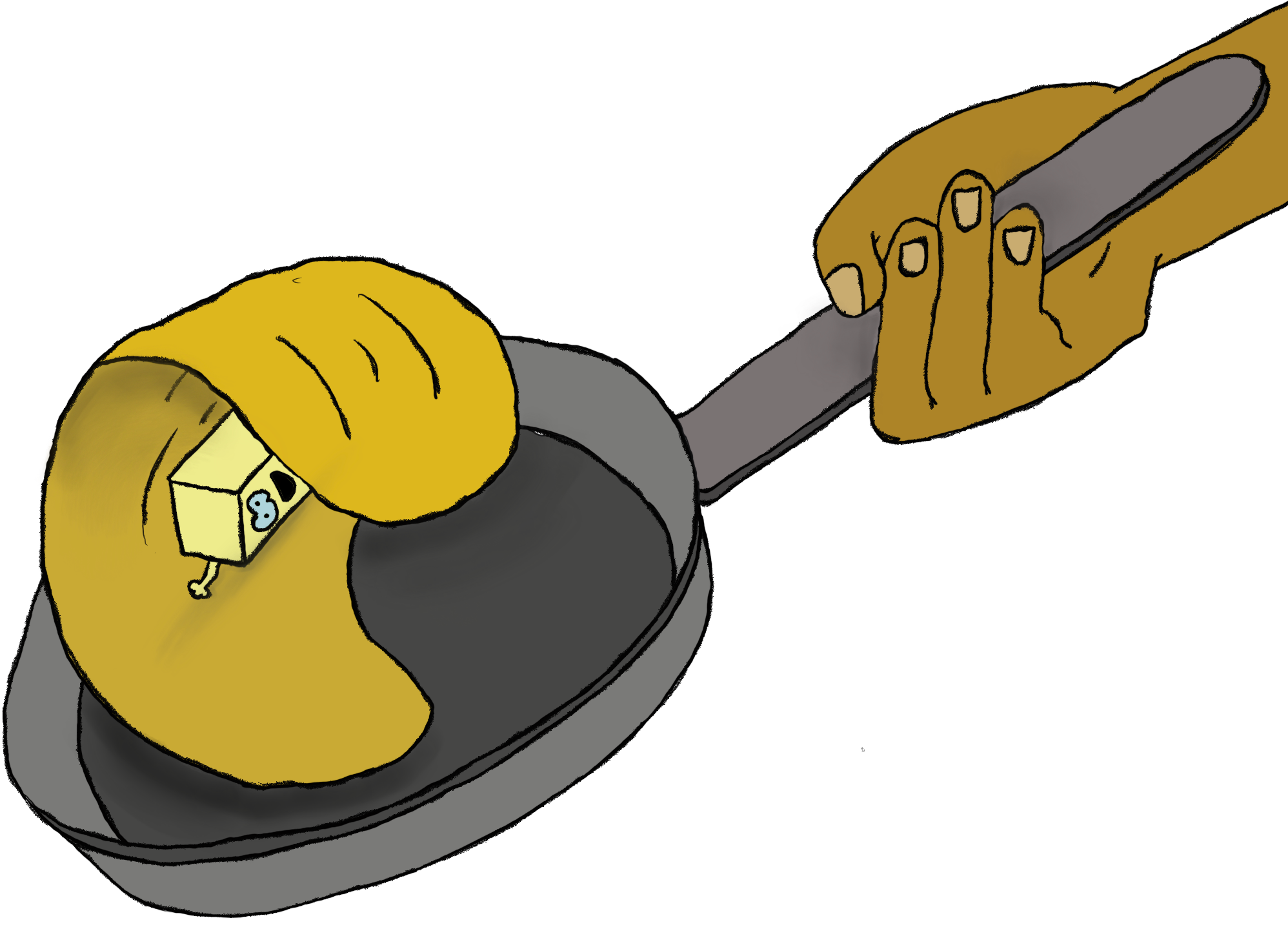
Moreover, I have the experience and fabricated curriculum vitae that says I’m qualified to read books and then write a glorified book report about them. Plus, I know a lot of important food writers, like Bertrand Whittlespoon, who will make cameos here to share saucy food exposes .
So, as you sit there with your mouse hovering over the “Subscribe” button, please keep in mind that my scrambled eggs will go caviar-less if you don’t subscribe. Is that something you can really live with?
If that’s not enough of a sales pitch, then this will really drive home the value. There will be no recipes. Yep. My theory (based on no scientific research or plausible data) is that recipes do little to improve your understanding of how ingredients function or transform in the kitchen. Recipes lack the substance or context that foster your understanding of flavors and their combinations. Instead, recipes confine you to a set of parameters that dampen your curiosity and hinder the tiny cognitive connections you make between palate and memory. And if that sous-vide pseudo science doesn’t convince you, then consider that recipes are as ubiquitous on the internet as conspiracy theories. And, while we all need conspiracy theories to answer life’s big questions, we probably don’t need any more 30 minute dinner recipes.
The aim here is to build comfort and confidence as a cook by familiarizing ourselves with methods and techniques, not from following a dogmatic set of measurements. When you begin to understand those concepts then it empowers you to pursue different dishes, cuisines, and flavors.
If you’re curious about the recipes themselves, then I recommend seeking out all referenced material at the local library. That’s where I get all of my cookbooks - because I don’t have adequate floating shelves to accommodate them - and it’s an affordable way to explore ideas without committing massive amounts of money. Money that could be better spent supporting this esteemable publication.
So, there’s the new concept. I appreciate you joining in on this grand experiment. Like every dish in the kitchen, this project undergoes a process of tasting and tweaking to achieve maximum tastiness. I hope the new flavor suits you, at least enough to try another bite.